

How to Dental Floss
To have good dental health, you need a mix of personal dental care, and the care of your dentist.
Flossing
Flossing removes plaque and bacteria that you cannot reach with your toothbrush. If you don’t floss, you are missing more than one-third of your tooth surface. Plaque is the main cause of gum disease. It is an invisible bacterial film that develops on your teeth every day.
Within 24 to 36 hours, plaque hardens into tartar (also called calculus), which can only be removed by professional cleaning. Floss at least once a day, and plaque never gets the chance to harden into tartar. Getting into the habit of daily flossing is easier when you floss while doing something else like watching TV or listening to music, for example.
How to floss your teeth
Step 1
Take a length of floss equal to the distance from your hand to your shoulder.
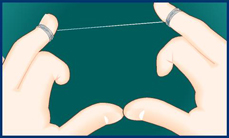
Wrap it around your index and middle fingers, leaving about two inches between your hands.
Step 2
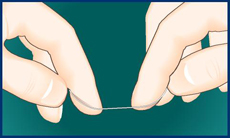
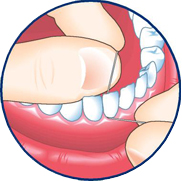
Slide the floss between your teeth and wrap it into a “C” shape around the base of the tooth and gently under the gumline. Wipe the tooth from base to tip two or three times.
Step 3
Be sure to floss both sides of every tooth. Don’t forget the backs of your last molars. Go to a new section of the floss as it wears and picks up particles. After flossing, roll it up in a tiny ball and put it in the garbage. Never flush floss down the toilet.
Step 4
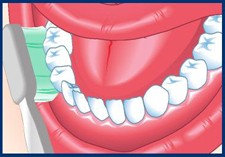
Brush your teeth after you floss – it is a more effective method of preventing tooth decay and gum disease.
Flossing Problems and Solutions
Gums sometimes bleed when you first begin to floss. Bleeding usually stops after a few days. If bleeding does not stop, see your dentist. Floss can shred if you snag it on an old filling or on the ragged edge of a tooth.
Try another type of floss or dental tape. Ask your dentist or dental hygienist for advice. If your floss still shreds, see your dentist.